The Cadney Lab at CSU Long Beach is broadly interested in studying the evolution of complex traits using an artificially-selected breed of High Runner mice. Our work ranges across all levels of biological organization, having broad implications for evolutionary biology and health and disease from the molecular to behavioral. Our integrative model uses exercise physiology as a vehicle for answering these questions.
CURRICULUM VITAE:
View PDF here
JOIN US:
Accepting
> Undergraduate students
> Masters students
Please email for now…
CONTACT ME:
marcell dot cadney at csulb.edu
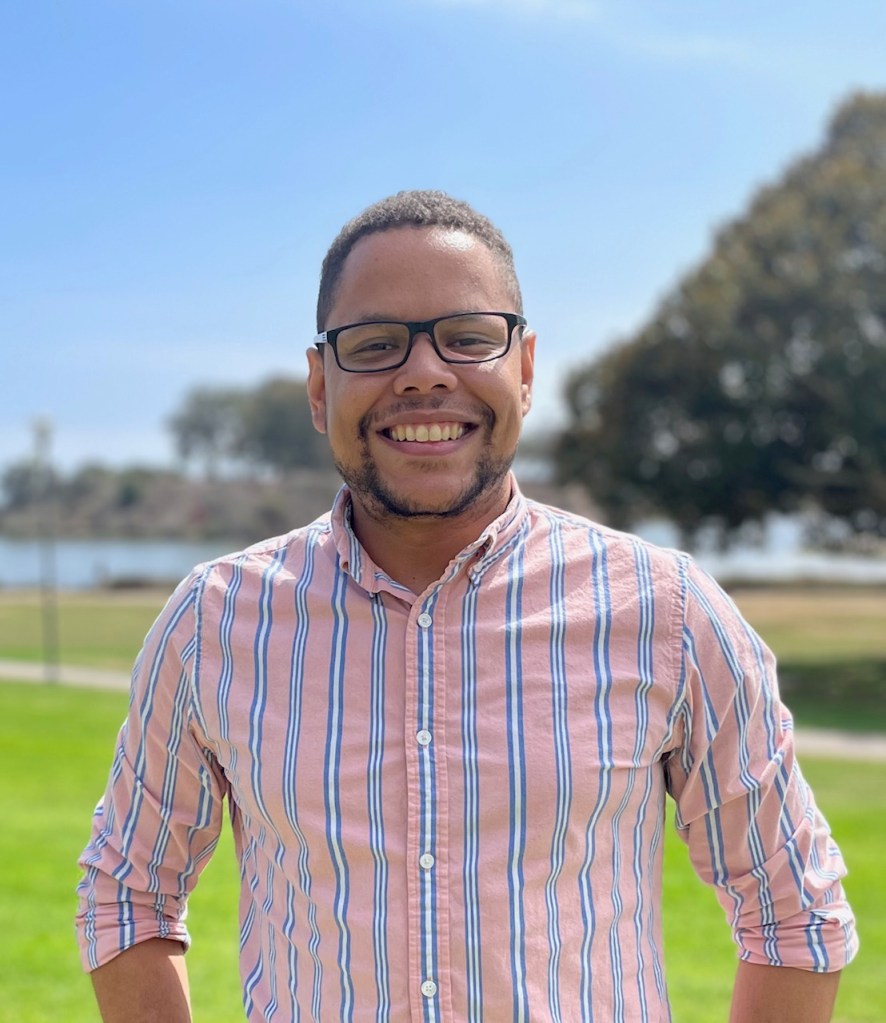
Dr. Marcell Cadney
Assistant Professor of
Evolutionary Biology
MLSC – 226
Department of Biological Sciences | CSULB
Research
Early-life effects:
People generally know that your environment can affect your health. What is less appreciated is the degree to which the early-life environment can drive changes that follow us well into adulthood, even in the absence of continued exposure. The Cadney Lab is interested in studying this question using the High Runner mice to address possible gene-by-environment interactions with various dietary exposures and exercise schemes experienced early in life.
Epigenetics:
We have previously shown that access to an exercise wheel has consistent early-life effects on adult phenotype (and in a way interacts with genetic background!). However, our standard mouse model treats the mechanisms of such effects as a black box – i.e., young mouse receives treatment, old mouse shows effects, something is happening in between. One likely mechanism is environmentally-induced epigenetic factors that alter gene expression. One primary focus of this lab is to explore the epigenetic landscape of the High Runner “exposome” and understand a little more about what goes on in the black box.
Continued Selection:
The High Runner selection experiment began in 1993 with Dr. Ted Garland and his colleagues and it has gone for 100 generations of selective breeding. As the UC Riverside colony comes to a close, selection will continue at CSU Long Beach for another 100 generations. The High Runner mice continue to be a great animal model for disease prevention, gut microbiome evolution, biomechanics, and much else. We look forward to starting many new projects. Reach out to Dr. Cadney for possible collaborations!
Publications
Schwartz, N. E., M. P. Schmill, M. D. Cadney, A. A. Castro, D. A. Hillis, M. P. McNamara, J. O. Rashid, W. Lampman, D. F. DeLaCruz, B. D. Tran, N. L. Trutalli, and T. Garland, Jr. 2024. Maternal exercise opportunity before, during, and after pregnancy alters maternal care behavior, offspring development, and offspring survival, but has few effects on offspring adult physical activity or body composition. Physiology & Behavior. In press.
Latchney, S. E., M. D. Cadney, A. Hopkins, and T. Garland Jr. 2023. Maternal upbringing and selective breeding for voluntary exercise behavior modify patterns of DNA methylation and expression of genes in the mouse brain. Genes, Brain and Behavior e12858. PDF
McNamara, M. P., E. M. Venable, M. D. Cadney, A. A. Castro, M. P. Schmill, L. Kazzazi, R. N. Carmody, and T. Garland, Jr. 2022. Weanling gut microbiota composition of a mouse model selectively bred for high voluntary wheel-running behavior. Journal of Experimental Biology. In review. PDF
Cadney, M. D., R. L. Albuquerque, N. E. Schwartz, M. P. McNamara, A. A. Castro, M. P. Schmill, D. A. Hillis, and T. Garland. 2022. Effects of early-life voluntary exercise and fructose on adult activity levels, body composition, aerobic capacity, and organ masses in mice bred for high voluntary wheel-running behavior. J Dev Orig Health Dis 1–12. LINK
Latchney, S. E., M. D. Cadney, A. Hopkins, and T. Garland, Jr. 2022. DNA methylation analysis of imprinted genes in the cortex and hippocampus of cross-fostered mice selectively bred for increased voluntary wheel-running. Behav Genet 52:281–297. PDF
McNamara, M. P., M. D. Cadney, A. A. Castro, D. A. Hillis, K. M. Kallini, J. C. Macbeth, M. P. Schmill, N. E. Schwartz, A. Hsiao, and T. Garland Jr. 2022. Oral antibiotics reduce voluntary exercise behavior in athletic mice. Behavioural Processes 199:104650. PDF
Cadney, M. D., L. Hiramatsu, Z. Thompson, M. Zhao, J. C. Kay, J. M. Singleton, R. L. de Albuquerque, M. P. Schmill, W. Saltzman, and T. Garland Jr. 2021. Effects of early-life exposure to Western diet and voluntary exercise on adult activity levels, exercise physiology, and associated traits in selectively bred High Runner mice. Physiology & Behavior 234:113389. PDF
Cadney, M. D., N. E. Schwartz, M. P. McNamara, M. P. Schmill, A. A. Castro, D. A. Hillis, and T. Garland Jr. 2021. Cross-fostering selectively bred high runner mice affects adult body mass but not voluntary exercise. Physiology & Behavior 241:113569. PDF
McNamara, M. P., J. M. Singleton, M. D. Cadney, P. M. Ruegger, J. Borneman, and T. Garland, Jr. 2021. Early-life effects of juvenile Western diet and exercise on adult gut microbiome composition in mice. Journal of Experimental Biology 224:jeb239699. PDF
Schmill, M. P., M. D. Cadney, Z. Thompson, L. Hiramatsu, R. L. Albuquerque, M. P. McNamara, A. A. Castro, J. C. Kay, D. G. Buenaventura, J. L. Ramirez, J. S. Rhodes, and T. Garland, Jr. 2021. Conditioned place preference for cocaine and methylphenidate in female mice from lines selectively bred for high voluntary wheel‐running behavior. Genes, Brain and Behavior 20(2):e12700. PDF
Garland, Jr., T., M. D. Cadney, and R. A. Waterland. 2017. Early-life effects on adult physical activity: concepts, relevance, and experimental approaches. Physiological and Biochemical Zoology 90:1–14. PDF
 Cadney Lab